|
|
|
|
|
|
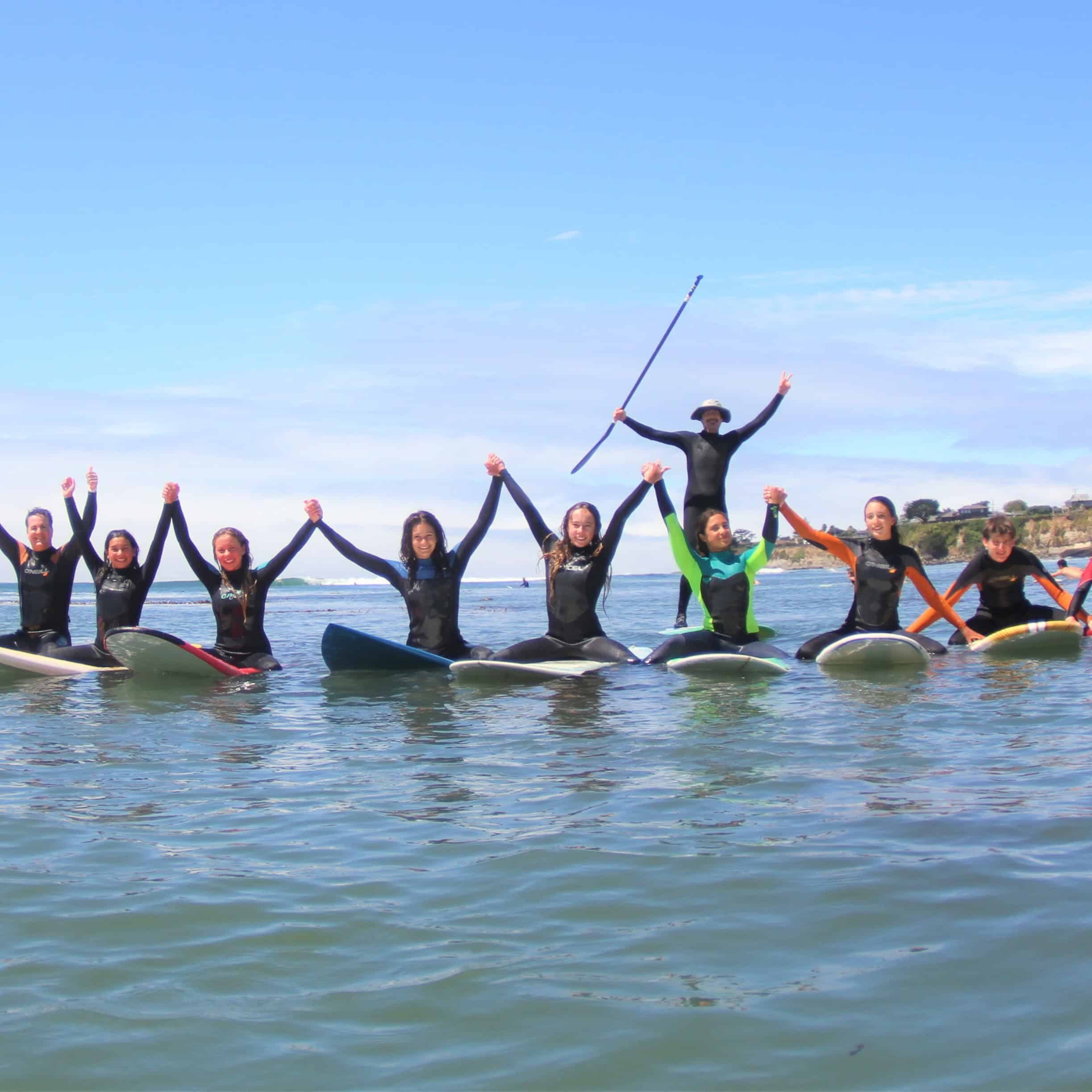
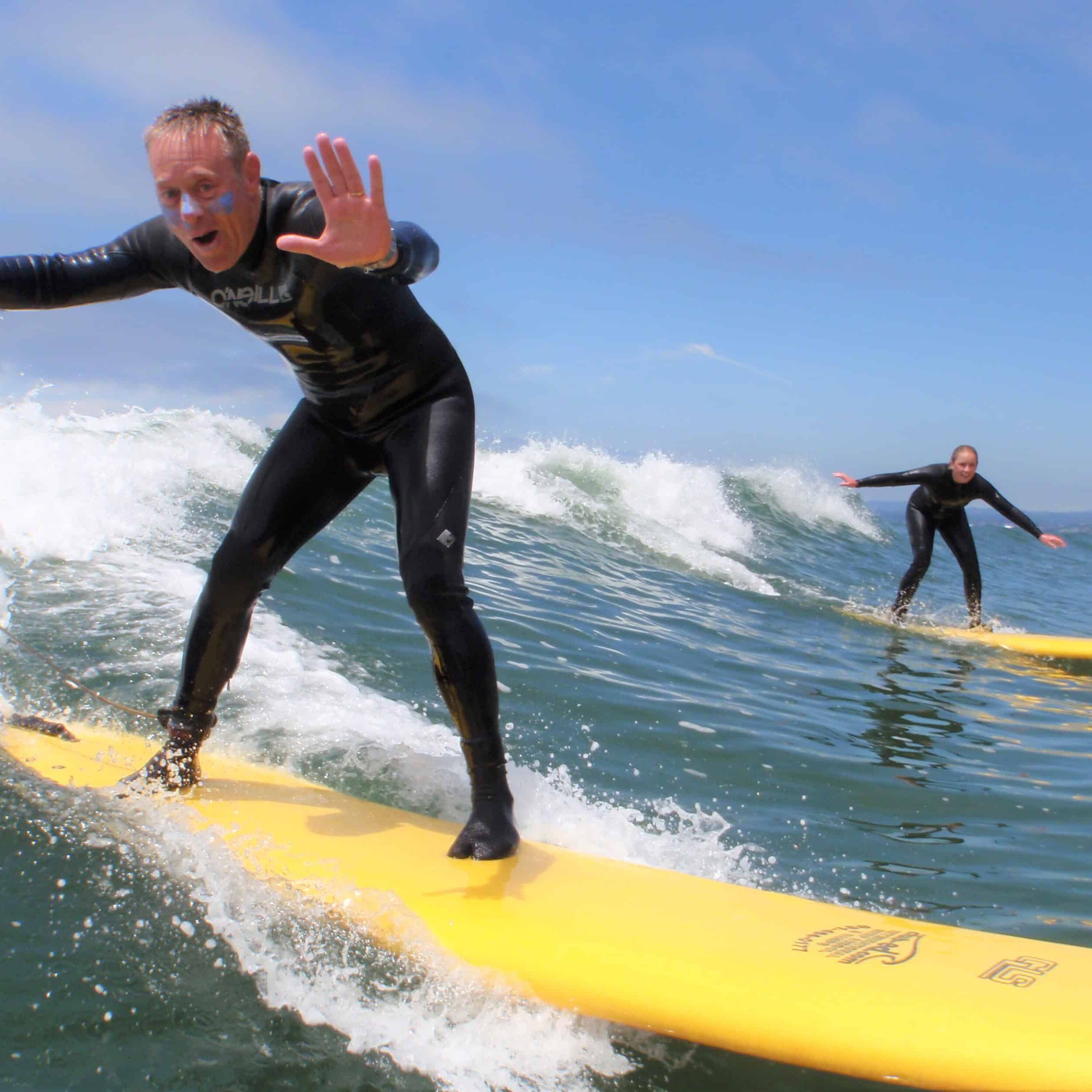
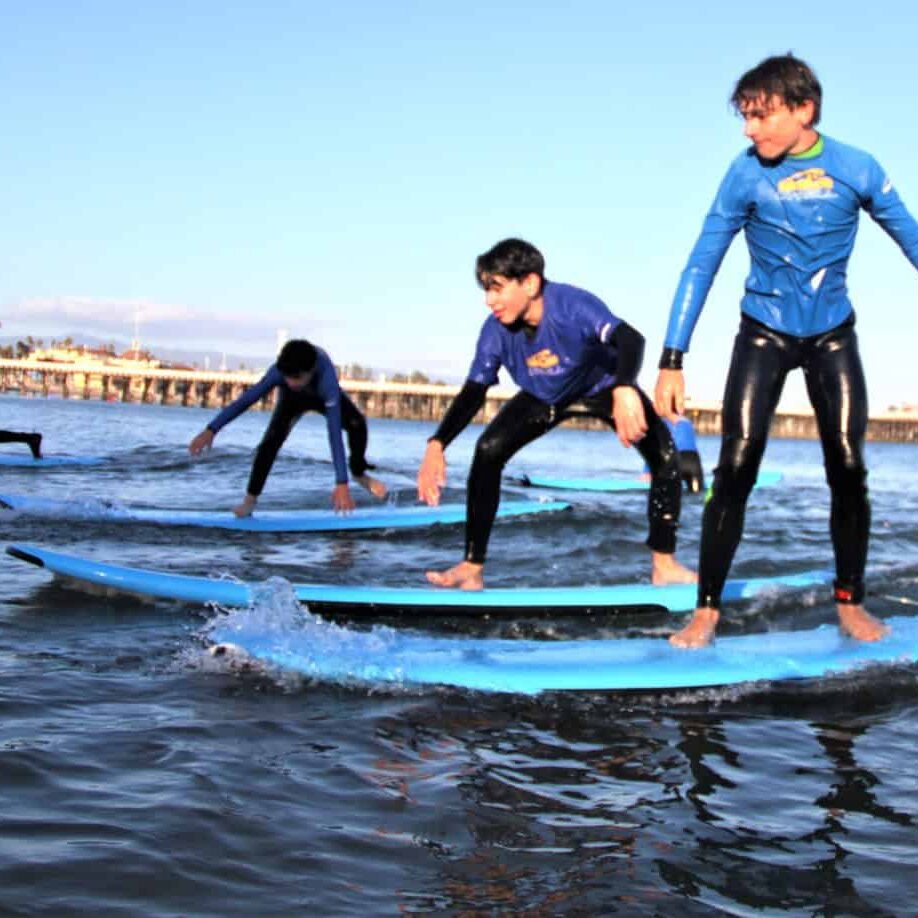
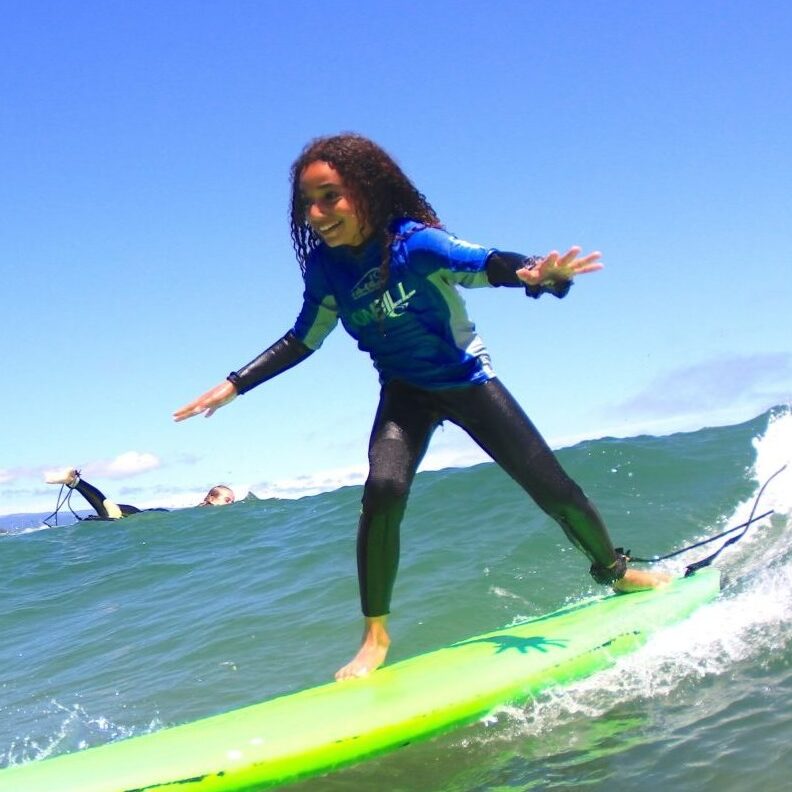
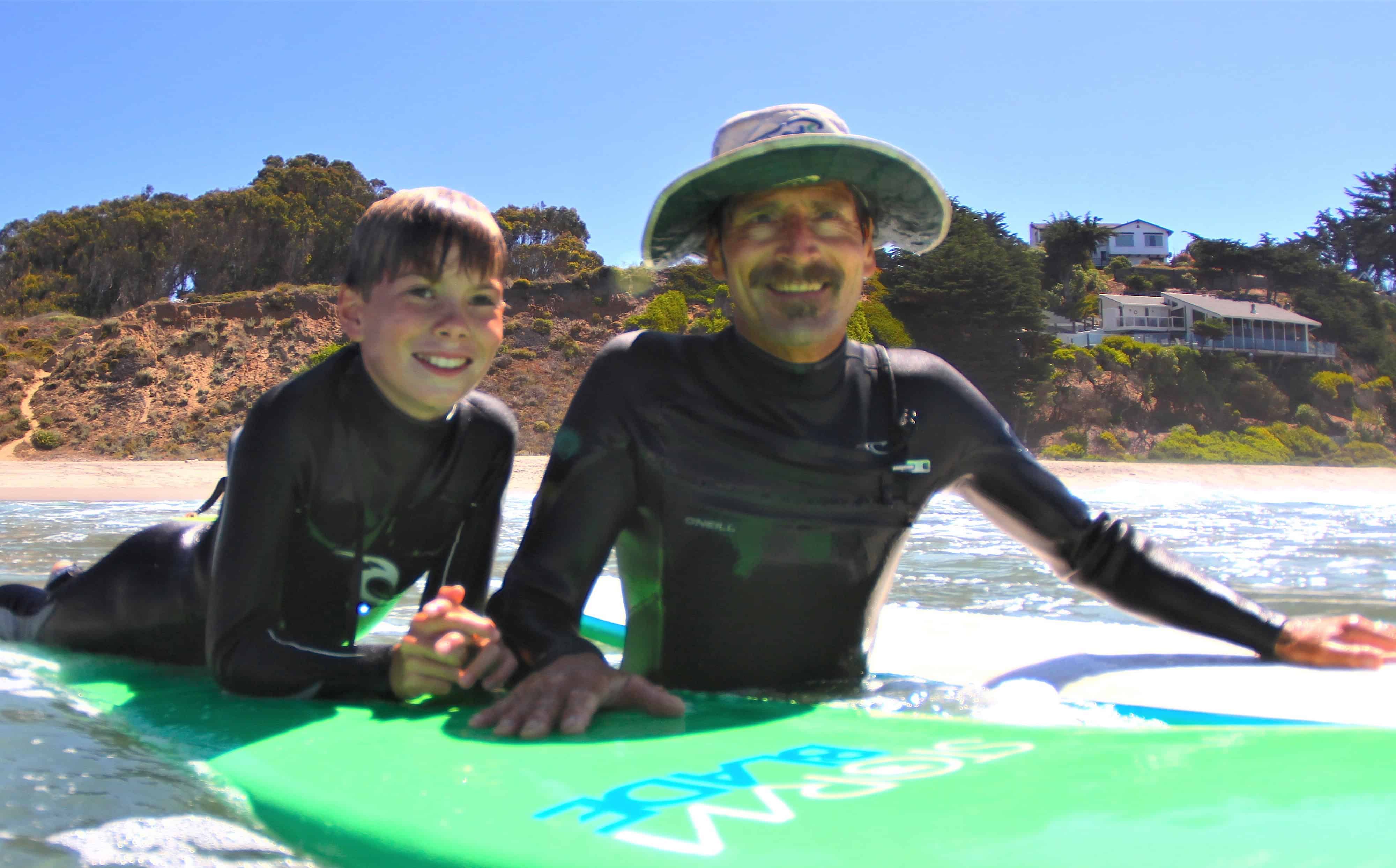
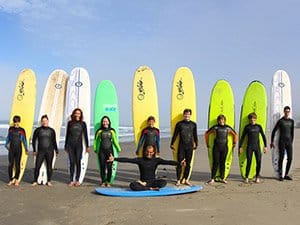
By Paul Menser Post Register SANTA Cruz, Calif. - Is there a time in life when itís too late to do the things youíve always wanted? Not yet, and not in California, which despite reports of its decline still has a few dreams left in its golden bag of goodies. Fast forward to Cowells Beach at Santa Cruz, where two men in their 40s (one of whom is me) are putting on rented wetsuits and getting ready to catch some waves under the watchful eye of Ed Guzman, owner of Club Ed Surf Schools and Camps. "We get people from all over the world," said Guzman, 41, who learned to surf in 1969. "Lots of guys say, ëGosh, Iíd love to do that.í Finally you come down and live your dream. This is a great job, helping people do that." In the case of Jon Lazares, 46, taking a lesson was a matter of catching up with a dream on hold for years. A company start-up specialist from Cupertino, Calif., Lazares grew up in southern California, where he surfed such hotspots as Huntington Beach and La Jolla. When he was 17, however, he got himself a car, which turned out to be his passport to slavery. "I thought, ëGreat, now I can go surfing all the time,í" he said. "Instead, I got a job to pay for my car." Twenty-nine years later, he wasnít sure what the day held in store for him. But is was a good day for waves at The Break at Cowells (the surfersí name for the spot), Thanks in part to El Niño. "It had a great effect," Guzman said. "It was stormy a lot in January and February, and it threw up a really nice sandbar that weíre still enjoying today." Legend has it that Santa Cruz is the place three Hawaiian princes who were going to school in nearby Santa Clara introduced surfing to the mainland in the late 1800s. They made their boards out of redwood timber from the nearby mountains. At the north end of Monterey Bay, Santa Cruz enjoys southern Californiaís milder weather combined with the rougher surf found on the northern Pacific Coast. "Thereís a larger window for waves, with the big swells coming out of the Aleutians," said Guzman, who estimated that 350 days of the year are surfable. Santa Cruz is sometimes known as "Surf City," and is home to surfing museum near the legendary Steamers Lane, where international competitions are held each February. Guzman said he wouldnít dream of taking a rookie to Steamers Lane. "This her is the bunny slope," he said. In fact, he guarantees novices they will stand upright on their boards and ride a wave in. The cost of a two-hour group lesson is $70, but if a beginner canít hack it, the lesson is free. Just as it is a good idea to get some instruction before you go skiing, a surfing lesson will save a beginner a lot of sorrow. Guzman said he started much differently, at San Franciscoís Ocean Beach ("Itís kind of like getting on a double black diamond ski run,") But itís not anything he would advise, and not just because he makes money teaching. "When youíre doing it without instruction, thereís a weeding out process," he said. In his case, heredity may have been on his side. His grandmother, Dorothy Becker, learned to surf in 1915 under the tutelage of David Kahanamoku, brother of Duke Kahanamoku, "The Ambassador of Surfing." She was reportedly the first woman to do a headstand on a surfboard, a stunt Guzman also mastered. (There are pictures of both on the Club Ed brochure.) What any beginning surfer needs to be aware of is his or her surroundings. "Itís like skiing, except that when youíre skiing the mountain isnít constantly moving," Guzman said. "You need to understand what the ocean is doing before you get into the water. If you donít pay attention, you get in trouble." Beginning surfers have a very narrow view of their surroundings, which can create some dangers. "Itís a lot like driving a car on a very crowded highway," he said. "The more experience you have, the wider your view is." Like there are on the road, in the surf there are rules of etiquette to be observed. The biggest no-no is cutting in front of a surfer who has caught the crest of a wave before you. All this is covered in a lesson on the beach, in which Guzman draws diagrams in the sand. Then n you do some stretches, which are very importance, especially for middle-aged men about to become reacquainted with long-forgotten muscles. The pivotal moment arrived, and the group ñ Guzman, Lazares, me and another instructor named Dougal (whose full name I never caught) ñ Paddled out to where the waves were breaking. Balance is everything, I learned, even when lying flat on the board and paddling in front of oncoming wave. Though I suspect Guzman was holding my board steady, I will brag that I stood up on my first wave and road for a respectable amount of time. (You ask, "Is it fun?" I ask, "Is Christmas on December 25th?") I would credit the 10-foot doyle surfboard I was on with being about as forgiving a piece of equipment as was ever invented. Also, the muscles in my lower back had not begun to groan in protest. That cam soon, however, and by the time my wife and 5-year-old son arrived at the beach to watch, it took a determined effort to get upright. "If it takes all strength I have, Iím riding all the way in," I said to myself and I did. "Youíre a hero now," said my wife, while my son romped in the surf sing a Beach Boys song ("Everybodyís gone surfing, surfing U.S.A.," which I never get tired of hearing from him.) Perhaps the biggest payoff came, however, when I pulled the board out of the surf, put it on top of my head and wailed down the beach. A rank beginner? Of course, but who needs to know? "Endless Summer," I thought, recalling the movie poster my friend Kevin Brodie had on his bedroom wall when we were in fifth grade. |